Showing posts with label Bali Art. Show all posts

2011-07-22

On Villa Design in Bali

The Shaba Bali
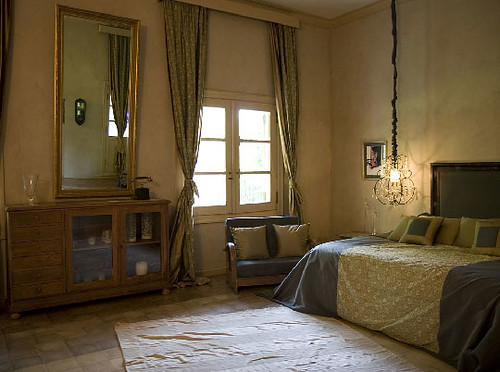
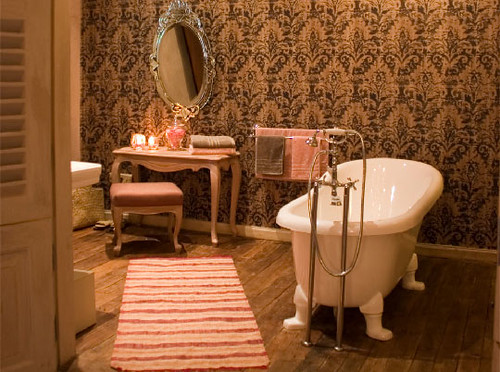
Driving through the tourism areas of Bali, you can hardly miss to spot hundreds of villas that have established over the last decade. Take a look on these villas especially their designs while you are driving and your drive will turn into architectural trip around the world.
The Shaba Bali
Many of these villas are masterpiece of architectural designs which remind us of European palace and castle, Japanese and Chinese house, Hawaiian hut, North African Kasbah or Hollywood mansion. Yes, there is a need to be different and special. This need seems to be fulfilled by the unique designs of these villas; adding different nuances to the paradise island of Bali and giving you a chance to taste a bit of Africa or Japan while spending your vacation in Bali.
The Shaba Bali
Some villas combine the foreign architecture with traditional Balinese architecture or decorations creating a West-meet-East, East-meet-East, or Mod-ethnic design, in order to infuse the sense of familiarity into the exotic atmosphere of Bali as well as creating a culture-friendly design.
Bali Villas – A Private Piece Of  Paradise
All luxurious Bali Villas in villas-bali.com have been filtered in order to provide you the best Bali Private Villa in experiencing holiday, wedding, honeymoon which guarantee Privacy and Outstanding Personalized Service.

source:blog.baliwww.com/

2011-04-15

Bali Dances and Performances

There are several other dances that could excite you. Dance and drama have historically played an important role in Balinese society. Balinese dances are famous all over the world and the Balinese themselves take them very seriously.

Birthdays, weddings, and temples festivals are all occasions for dramatic performances and dance is inextricably linked with the Balinese religion. Through this medium, people learnt about the tales of the Ramayana, Mahabrata and other epic stories from Balinese history.


Barong and Rangda dance

This is basically a story about the struggle between good and evil. Good is personified by the Barong Keket, a strange, fun-loving creature in the shape of a shaggy semi-lion. Evil is represented by Rangda, a witch. Ultimately, the two characters engage in battle, at which point the Barong's keris-bearingRata Kiri Kanan follower rush in to attack Rangda. The witch, however, uses her magical powers to turn the keris knives in upon their owners, who fall into a trance and start trying to stab themselves. The Barong uses magic to protect his followers from the knives. In the end, the Barong triumphs and Rangda retreats to recuperate her strength for the next encounter. All that remains is for a priest to help the keris dancers out of their trance, with the help of a little holy water. The Barong and Rangda dance is a very powerful performance and is not taken lightly by those involved.


Kecak Dance
The Kecak is an unusual Balinese dance for a couple of reasons. First, there is no musical accompaniment. The gamelan is not there. Rhythm is provided by a chanting 'monkey' chorus. The polyrhythmic sound of the chanting provides the name, 'Kecak'. The story line for the Kecak is taken from the Ramayana. Prince Rama goes hunting for a golden deer and his beautiful wife is kidnapped by the evil Rawana. Story is secondary in this performance, though. If you want to see the story of the Ramayana, you should see a Ramayana performance. The Kecak is a triumph of style and mood, rather than story. Watch the faces of audience members. More than any other Balinese dance, the Kecak turns every viewer into a child, wide-eyed and transfixed.


Legong Dance

The story derives from the history of East Java in the 1 2th and 1 3th centuries: when on a journey the King of Lasem finds the maiden Rangkesari lost in the forest. Rangkesari's brother. Prince Daha, gathers an army together to rescue his sister. Princess Rangkesari then tries to persuade Laksmi to let her go to avoid a war, but he denies her her freedom. On his way to battle, Daha is attacked by a raven, a bad omen, and is later killed in battle. The dance only takes the story up to the point where the king departs for battle, and it is performed by three people, two Legongs and their attendant, the "Condong". The Legong is a very classical and graceful dance, and is always performed by pre-pubescent girls, often as young as eight or nine years old.


Baris Dance
A warrior dance for a group of a dozen or middle age men, its purpose is to protect the visiting gods at temple festival from evil spirits. The dancers wear headdresses with a triangle of white clothe at the back. This dance requires great skill, with the artist having to display the whole range of inner emotions, mainly through facial expression.


Shanghyang Trance Dance

The Sanghyang is a divine force that enters the bodies of the entranced dancers. There are a number of dances, but the most common are the Sanghyang Dedari and the Snghyang Jaran. The Sanghyang Dedari is performed by two girls, and is very similar in style to the Legong; the main difference is that the Sanghyang Dedari girls are supposedly untrained and can keep in perfect time with each other, even though their eyes are firmly shut. The accompanying music is provided by a female choir and a male Kecak choir.
In the Sanghyang Jaran, a boy dances around and through a fire, riding a coconut palm hobbyhorse. This is a frequently called the "Fire Dance", for the sake of tourists. In both dances, a priest is always on hand to help bring the dancers out of their trance-state at the end of the performance.


Calon Arang
An exorcism drama aimed at the local village witches (leyak, celuluk) and performed when a new temple is dedicated.The part of rangda is taken by an experienced older aktor becouse the performance involves the witch going into an entrance rage, possessed so Balinese believe by the spirit of the actual Rangda. The end of this even id unpredictable and a Rangda can occasion run amok. The purpose of the performance is to placate the rangda by demonstrating her power, and thus gain her co-operation against the lesser witches in the village.


Mask Dance
In Bali, masks are considered sacred objects, and are revered as such. The best ones are traditionally carved on auspicious days, and the dancers who wear them are believed to be possessed by the spirits of the masks. Characters can be identified from the shape of the features; noble characters always wear full, refined masks; while evil is represented by bulging eyes and garish colours. The characters are silent, but communicate using complex gestures of the hand, head and body. The story lines usually follow popular myths, or episodes from history.


source:bali-travels.blogspot.com

2008-12-15

Bali Arts and Crafts


Traditional Balinese Creativity


The Balinese are surrounded by art throughout their lives as art is omnipresent in Bali. They make art out of the most basic necessities in their daily lives. However, artistic knowledge is not commissioned only to a special intellectual class, but is open to everyone at all levels. Painting, sculpture, carving and music have traditionally been the province of men, while women channeled their creative energy into creating lavish offerings to the gods. In every festival, you can see spectacular pyramids of flowers, fruit, and cakes up to two meters high, constructed with such love and adoration that it could only be meant for a higher being. Although a religiously regarded practice, Balinese art does not serve religion solely. Bemos, jackets, menus, motorcycles, hotel doorways and other objects are decorated with sacred symbols. They do not view this use as sacrilegious. It is incredible to see so many people in such a small area pour so much energy into creating beautiful things.


Bali Wood Carving

The Balinese sculpture with natural media - wood, stone, bone, horn, deadwood, and even gnarled tree roots. Nowadays, souvenir-caliber wood carving is churned out and successful creations are mass produced. Any visitor to Bali is likely to be exposed to wood carving in all forms, be it the traditional ornate carved doors, the carved figures of gods, or the countless carved items in craft shops. Wood carving is a craft practiced all over Bali. Open your ears to the tapping sound of the carver's mallet and you would know that there is one around. It would be taxing to separate traditional and foreign influences. However, Balinese are intense observers of the outside world, effortlessly incorporating and adapting foreign themes into their work.

For quality wood carving, head to Tegallalang, Pujung, and Sebatu, which is north of Ubud. It is a great area to meet woodcarvers; it is best to take note of the artist's name and visit him at the workshop to negotiate a better price. Bali is a perfect place for western artists to study their crafts. There are wood carving lessons in which you can learn to carve your own mask in about three weeks.


Bali Stone Carving

The technique used in stone carving is very much the same as wood carving since soft volcanic rock is used. Stone carving is relatively unaffected by tourist consumerism as most pieces are too exorbitant to ship. You can vividly see stone carving skills in the distinctive split gates, swirling stone friezes, and absurd and menacing mythological statuary. The centers for stone carving are Kapal and Batubulan. Although stone carvings were mainly used to decorate temples and palaces, the carvers had much more leeway in their use of subject matter than the artists and illustrators. There is little difference between the iconography decorating temples and that of private buildings. Gateways represent the dividing line between the inner and outer worlds, and as such are the recipients of some of the most fantastic carvings. As well as portraying deities and demons, the carvers included many scenes from public life and there are many temple surfaces enriched with the antics of the Dutch Colonialists, including scenes of bicycles, drunken parties, car break-downs and even airplanes. Bali's modem-day centre of stone carving is the village of Batubulan, situated halfway between Denpasar and Gianyar. Although you can see excellent examples of Balinese stone carving all over the island, the temples in the North tend to bc much more creative (with the exception of Pura Puseh in Batabulan).


Bali Textiles

One of the most striking things about Bali is the rich variety of cloths and materials that are to be seen in thousands of shops throughout the island. However, only a small proportion of these are indigenous to Bali. The myriad of batik clothes and sarongs available everywhere are mainly imported from Java. A large proportion of the woven cloths (Ikat) round in and around the Kuta / Legian area, are imported from the islands of Sumba and Flores. However, Bali does have a very rich textile industry of its own. The beautiful Songket fabrics wom by performers of traditional dance are a good example. In Songket, gold and silver threads are woven into the cloth to create complex motifs of birds, butterflies and flowers. Sometimes they use so much gold and silver that the underlying cloth is barely visible.

The first kind of textile that you will find in Bali is batik, which is popular among tourists and locals alike. There is every imaginable style and quality that you can chance upon throughout the island, but it is surprising that batik is actually produced in central Java and then shipped to Bali. Bali's own home-produced cloth is a weft ikat called endek. Ikat is made by tying the weft threads of a cloth before it is woven and then dying them so that the tied areas do not absorb the dye. The cloth is then woven and the pattern, created by the tying of the threads, emerges. This cloth is not very popular with visitors but is indispensable to the locals. Authentic ikat is made of silk but cotton and synthetic yarns are also widely used. Also, keep a look out for kain prada, fabrics woven of silk or cotton and decorated with silver or gold threads or gold leaf. These colorful kerchiefs are worn by temple girls during festivals and take three weeks to a month to weave.

(source:http://www.balispecial.com/bali-arts.html)

2008-01-16

Trance Of Dance

The balance was the core from living philosophy in Bali. In fact the concept of this life was also used in the Javanese community and another part the ethnic group in Indonesia. The values of equality towards nature, interpersonal humankind and the worship against something that was regarded as highest were culture of the local community that could not be separated in the everyday life.

The community believed that to one another would mutually relate and affected each other. In art, the dance was one of the various styles of culture that was most prominent in Indonesia, especially in the style of Balinese culture.

The dance was born as the rhythmic movement would the community”™s response to curiosity, pleasure, the fear, et cetera that happened in the everyday life.

Not surprised if in the long run the Balinese dance often adopted in visual nature and cognition humankind as the creative idea material. The Trance Of Dance time, the movement and the eyes looked in each Balinese dance available always had the story that was not far the difference from the real life.

For the Balinese community, the dance was not only as the form of art, but also as ritual prosperity and the safety. In certain dances was gotten unsure magical that functioned as blocker bad strengths that were connected with the plague of the illness (epidemic) or the other disaster. Here the dance no longer becomes the artistic show, but as ritual that had mysterious intentions.

Intentions that were mysterious with unique rhythms that became one intact unity, made the Balinese dance to be very interesting despite quite a few people who regarded that as the ritual form primitive.- It was different from the European dance that tended to lift heels and straightened foot like as ballet, the European dance tended aim at the view of the eyes above.

In the Balinese dance but also in most traditional Indonesian dances, the concept folded foot and bowed the head was the most important part in unsure this dance. The concept appreciated the earth and the fertility of reflected nature in this movement.

In the traditional dance, trace was the basic incident from the achievement of the aim of this local art. A dancer who did not make the dance aware will experience the incident supernatural that possibly it was considered did not make sense. Strengths magic and kept against the sharp object to the dancer that has did not realist himself was real proof that in fact coexistence humankind with other matter.

Traced of a dancer that was becomes proof that approval relations of a matter that was other with the existence of this humankind. Whereas the dance personally, only connecting bridge relationship humankind with other think.

(source http://www.baliexplorenews.com)

Egg Painting

The Balinese island was indeed rich in the culture and the tradition apart from his nature that really enchanted. It is not surprising afterwards Bali was known as one of he reas f the Cultural tour.

From however many areas of the aim of the tour, more incomplete apparently if you came to the Balinese Island not make use of visited to the upgrading Series, the Rock Village, Sukawati - Gianyar.

In this village you could witness the community around that was doing several good paintings the traditional and modern motive that was so beautiful. Attracted by art work is media that was used not from canvas, paper or wood but an egg.

Very exotic, and it seems untiringly we saw the wonder because apart from beautiful also unique. This diligence was given by the Egg Painting name, because his base indeed came from egg skin. The normal egg used by the craftsman was the duck egg, the goose egg, the egg and the ostrich egg of assowary birds.

Definitely before the egg was used before must e processed. Initially the contents of eggs were issued before with used spait, which the egg is not rotten and skin was not broken. After that the egg drayed, just afterwards in the sandpaper to be refined.

After soft egg skin just afterwards was made the model/ the motive to his surface. The further process is coloring. Normal dye was used by the craftsmen was Acrylic with consideration of the color was not easy faded although being affected by water.

After coloring was finish, the next step is finishing with sprayed clear glosses so that the painting is seen clear and not easy broken.

From subject hat was successful in interviewed by Balinese Explore News, namely I Wayan Kenyat one of the Great employees Putra Egg painting said, that Time that was needed to complete an egg painting that too many depended the motive and big the small size of he egg.

To that was measuring small like the duck egg, usually the craftsman only needs time 1 day, for the goose egg needed time 2 days. To that was measuring was, as the egg of cassowary birds needed time 1 week, whereas to that measuring.


(Source:http://www.baliexplorenews.com)

2007-11-13

Bali Arts

Painting

Some travelers visit Bali simply to buy paintings. They hop off the plane, catch a taxi to Ubud, acquaint themselves with the going prices, and then begin the buying spree.

Balinese paintings are known for their vibrant colors, iconography, stylized figures and ornate backgrounds, and are almost certainly derived from the Wayang Kulit or shadow puppet theatre. The similarities between the colorful, stylized puppets and the figures depicted in many paintings, illustrate the connection. Of course, the influx of Majapahit Hindus also had an impact on painting styles, not to mention Western artists.


Earliest paintings

The earliest paintings, known as the Kamasan style are traced to the 17th century kingdom of Klungkung, where Wayang Kulit figures were incorporated into paintings. Initially, the pictures adorned temples, later becoming decorations for the home. The figures are typically shown frontal, a three quarter view of the face rather than a profile as with the puppets. The artists used natural pigments on bark paper, wooden boards, or on woven, unbleached cloth. Themes are mainly derived from the Hindu epics, the Ramayana and Mahabharata.

Twentieth Century

In the early 20th century, no rajas to commission works, many painters laid their brushes to rest. Between the World Wars, a couple of Western artists who’d heard about a haven of artisans, moved to Ubud. The German, Walter Spies, and the Dutch artist, Rudolf Bonnet, established studios in Ubud, encouraging the locals to ignore set formulas, and themselves toying the traditional Balinese methods. The artists used Western style materials, the themes were often free of Religious symbolism, focusing on daily scenes. Colors were restrained, even monochrome, the figures comparatively realistic, although light and shade were largely ignored.

A new generation of Balinese painters was born Made Griya, I Gusti Nyoman Lempad and Ida Bagus Anom. In 1936, Spies, Bonnet and several indigenous painters founded an association called Pita Maha devoted to the development of the arts in Ubud, but it disintegrated with the outbreak of the Second World War.

In Batuan, at this time, artists were creating their own styles, some influenced by the Pita Maha. Batuan paintings featured fine lines, painstaking detail filling the entire canvas, and sombre greens and maroons. Themes included fables, legends, the supernatural and later, tourism. I Made Budi, is especially famous for his witty interpretations of tourism, as well as political events.

From the 1950s to the Present

In the 1950s, in Penestanan, a new style emerged influenced by the Dutch painter, Arie Smit, the Australian Donald Friend. Characterized by strong primary colors and simple, bold lines, the paintings demonstrated a child like joy of reality. The paintings sometimes referred to as the naive or young artists style, are extremely popular among tourists, and despite their relatively simple and quick creation, demand the same prices as more complex and technically superior paintings.

There are a few academic painters who have received formal training abroad or at the Indonesian art academies in Yogyakarta and Denpasar. These painters are dedicated to personal styles while still exhibiting Balinese influences.

Carving

The Balinese will carve and sculpt anything wood, stone, bone, horn, deadwood, even roots. It seems that no stone is left unadorned, no piece of wood bare. The ornate split gateways of the temples, to the door of your hotel, everything seems to be carved.

Traditionally, stone was carved for temples and buildings. There has always been a demand for stone carvers, because the soft volcanic paras used for building, although easy to sculpt, deteriorates quickly. Tourism, however, has altered demand, and many carvers have turned to wood.

Initially, the woodcarvers were Brahmana, dedicated to carving for ritual or courtly commissions, the tradition was passed to their son. The traditional Wayang style was prevalent, depicting religious characters and tales of the Ramayana and Mahabharata epics.

Under the influence of Walter Spies, the Pita Maha, the style of carving developed to portray realistic, daily scenes. Today, painted carvings made out of local soft woods are mass produced and imitation fruit, garish garuda and tacky masks can be bought anywhere. Despite the mindless duplication, there are sculptures carved with genius. Like the one made by I Nyoman Tjokot.

The Art Centre at Denpasar and Ida Bagus Tilems gallery at Mas, offer rare treasures.


Textiles

Cloth, to the Balinese, is not so much a necessity as a mark of religious and social standing. Even statues and shrines share in the sartorial splendor.

Balinese cloth is amazingly cheap and gorgeous. Buying from the markets is easy, but the best bet is to venture into the weaving factories and cloth shops. And while you’re there, have a seamstress transform your purchase into a fine garment.

Batik

Hate to disappoint, but most batik sold to tourists is imported from Java. Some factories make hand figured batik, particularly in Gianyar.

Endek

A tie dyed woven cloth, endek is created from the ikat method of dyeing. Sections of the fabric are wrapped, and then the cloth is immersed in dye, the wrapped parts remaining undyed. The process can be repeated several times. This creates a muted, wavy pattern.

Kain Prada

These are fine fabrics of woven silk or cotton decorated with gold or silver threads, and are usually made into scarfs.

Geringsing

This is a rare method of weaving, only practiced in Tenganan, Karangasem. Both the warp and the weft are dyed in what’s called the double ikat method. Colors are made from natural dyes, and are limited to black, red and yellow. One piece of geringsing may take a couple of years to work. Prices are around one million rupiah range, but the cloth is extremely rare and painstakingly crafted.

Songket

This is the real ceremonial brocade. Gold and silver threads are added on the loom creating a range of patterns simple lines to intricate lotus flowers and Wayang Wit figures.

Songket is sold in art shops throughout the island.