Showing posts with label About Bali. Show all posts

2009-03-16

Six Amazing Rice Terraces


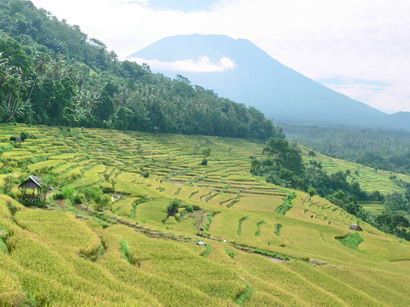
Visitors to Bali have an abundance of places and attractions to visit besides the chaos of shopping and partying in the tourist strip. Bali is renowned for its numerous temples and other places of worship, its fascinating culture and its beautiful, friendly people. Wherever visitors go into the countryside on day trips it is inevitable they will see the rice terraces that adorn the faces of hills and mountains, the higher you go in elevation on the island, the more spectacular the rice terraces. These terraces are a classic feature on the landscape of Bali and are the rice cultivation on varying levels that follow the natural contours of the escarpments. The land is formed into multiple terraces, giving them a stepped appearance and are, in this manner of agriculture, a method of soil conservation to slow or prevent the rapid surface runoff of irrigation water. These rice terraces off some of the most spectacular panoramas and most are, breathtaking.

I have always found the best times to photograph these magnificent views is either early in the morning or late in the afternoon. During these times the sun is less harsh and enables the richness of the colours to be more defined.

Source:baliblog.com


2009-03-14

Tropical Fruit of Bali

Bali has an abundance of fruit with many varieties that are a lot more interesting than just your average apple or orange. Tropical fruits come in strange colours, shapes and textures, yet each is quite exotic in its own way.

Just about everyone seems to enjoy the mangosteen which has been referred to as the ‘Queen of Fruits’. Slightly smaller than a tennis ball with a deep purple skin, the inside reveals 4-8 pinky-white edible segments that are delicately sweet.

One of the oddest looking tropical fruit in Bali is the rambutan, also known as hairy fruit. This reflects the fruits most unusual skin of soft rubbery spines that are crimson in colour. Inside is a single piece of sweet translucent flesh that surrounds a woody seed. The whole segment is pooped into the mouth and the tangy flesh nibbled off leaving only the inedible seed.

Another unusual fruit is the salak, which is recognized by its teardrop shape and brown scaly snake-like peel. The fruit inside consists of a large segment and one or two smaller lobes that tastes pleasantly crisp with the consistency of a carrot. Salak is not a remarkable tasting fruit, yet it grows abundantly in Bali’s drier regions and is readily available at the local marketplace.

The seasonal fruit called durian is a great favourite within the Asian community and because it is such a delicacy it can be quite expensive. Known for its pungent odour that many Westerners find quite offensive, this controversial fruit is often banned from hotels and restaurants. Durian generally comes in the shape of a coconut, often larger, with a thick pale green outer rind that is covered with sharp thorns. Once cut open with a butcher’s cleaver, the inside reveals sections of creamy pulp that surrounds large seeds.

Banana, mango, papaya, pineapple and coconut are also some of the types of tropical fruits that are plentiful in Bali. A platter of seasonal fresh fruits or a delicious blended juice makes a refreshing holiday breakfast.

Mangosteen Fruit Rambutan Fruit Salak Fruit Durien Fruit

Banana Fruit Mango Fruit papaya Fruit Pineapple Fruit Coconut Fruit

Source:blog.baliwww.com

Flora and Fauna of Bali

The tropical climate, with its biannual change of seasons, makes volcanic Bali a very fertile land. Many different kinds of tropical plants Wow well in the cool highlands and hot, dry coastal areas. The average humidity of 60% during the dry season and 100% during the rainy season influences fertility of the many types of tropical flora, which Wow in Bali.

FrangipaniThe daily life of the Hindu Balinese, which is strongly characterized with a diverse range of rituals, makes plentiful use of the fauna and flora available on the island. Leaves and coconuts of the palm tree, bananas, fruits, and a diverse range of flowers are some examples of the flora that is used frequently in daily life. Fruits, such as the salak and the jeruk (citrus), are popularly used as offerings, and are known throughout the archipelago as a specialty of the fruits cultivated in Bali.

Aside from the areas near the seashore surrounding the island, the regency of Jembrana in West Bali is the largest provider of coconuts with its palm tree plantations, whereas many kinds of fruits and flowers are grown in the mountain areas such as Bedugul, Bangli and northern Badung. Tree trunks, found in most areas of Bali, are used as building material. For example, the kwantitan (jackfruit tree) is generally used for the construction of buildings in Bali.

Jalak BaliVarious kinds of animals are also used in Balinese rituals. Cocks, hens, pigs, and chicks are most often used in a variety of daily rituals, whereas animals that take a long time to grow are used for higher level rites, like the Tawur Bhuta Yadnya which happens in cycles of more than five years. Tigers, for example, are only used in the Eka Dasa Rudra ritual, which occurs every hundred years.

Bali is known for the Jalak Bali, which is extremely rare because of its very low population growth. Its habitat, the West Bali National Park, is increasingly affected by pollution, and poachers and smugglers have also caused the population of the Jalak Bali to fall. It is of deep concern that, unless it receives proper protection, the Jalak Bali may shortly become extinct in its natural habitat.

Source:blog.baliwww.com


2007-12-04

The Image of Bali

Over the last seventy years, writers of travel books, books on Bali and the writers for the internet’s pages have given a great contribution to shape the image of Bali, and until now the process of shaping the image of Bali is still on the way.


During the period of 1920s and 1930s, the image of Bali as a paradise was first created. On that time, the Dutch government began promoting Bali as a tourism destination. The pioneers of tourism in Bali such as Hickman Powell, Collin McPhee, etc, bolstered the image of Bali as a paradise. For Hickman Powell Bali was a vast wonderland, embodied the dream of pastoral poets. For Collin McPhee, each part of the day in Bali had a quality, which revealed a particular aspect of the island. The morning was “a golden freshness” when the island ‘dripped and shone with moisture like a garden in a florist’s window’. In the middle of the day, Bali ‘had become hard and matter-of-fact. In the afternoon and in the evening its qualities shone through, as “it grew unreal, lavish and theatrical like old-fashioned opera scenery.

Since that time the image of Bali is slowly built up with decades of tourist promotion, thousands of academic and travel writing, this great effort makes the image of Bali as the last paradise almost irrefutable. Each new writer has taken something from earlier works and developed it.


Nowadays, Bali could be nothing else but a rich ancient culture, the morning of the world, a forgotten medieval community where sun-bronzed women dress as eve, a land where nobody hurries, and all in peace, a spiritual community of care-free islander…as happy as a mortal can be, where everyone you meet is a dancer or an artist, where every day begins and ends with splendors of the nature: ‘as near an approach this side of heaven to a poet dream’.


As mentioned before, the shaping of Bali’s image is still going on. Bali changes a lot, these changes will eventually affect the already made image and reshape it into the new one.

Will Bali still be the last paradise?

Note : Most of the materials for this writing were take from Adrian Vickers’, Bali: Paradise Created

Nature of Bali

Bali is a part of Indonesian archipelago; lying 3.2 km east of Java and 24 west of Lombok, compare with some of the Indonesian archipelago’s giant islands, Bali is quite small with an area of 5,632 square kilometers The island is approximately 135 km wide east to west and 90 km north to south. The highest point is Mount Agung at 3,142 m (10,308 feet) and the lowest is the beaches all over the island (sea level, 0 m). Located approximately 8 degrees south of the equator, Bali has warm tropical climate with plenty of rain and agreeable dry season.


Bali is noted for the beauty and variety of the landscapes from coastal lowland to the exhilarating high mountain lakes, barren limestone plateaus to thick monsoon forests. A west-to-east volcanic chain divides the island in half. Bali’s mountains covered in tall rainforest stand in contrast to the wild and rugged beauty of volcanic craters, some of which are still active. Crater lakes are found at Batur in the east and Bratan, Buyan and Tamblingan in the rich submontane rainforest area around Bedugul. Fast flowing rivers, deep ravines, rugged saddles, and alluvial slopes score the surface of the island.


The south-central plain of Bali is intensively cultivated. Terraced rice fields dominate the landscape. As you leave the heavily cultivated southern plains ascend to the north, the landscapes change from cascades of rice fields to gardens of vegetables, onion and coffee plantations thriving in cooler climate. The mountainous highlands of Bali are field with streams, rainforests which house prehistoric tree-ferns, wildflowers, creepers, orchids, leeches, butterflies, birds and monkeys, while tall pines and cypress grow high above the mountain villages of Kintamani, Penelokan and Bedugul. Far in western part of Bali, an unspoiled, under-populated marine and forest wilderness are converted into West Bali National Park.

Far in the north, there is a sharp drop from mountain to narrow strip of fertile coastal plain around Singaraja. The lowland coastal fringe of the north is narrow and the absence of rivers makes the land dry and less suitable for rice cultivation. Clusters of palm trees, and tall grasses dominate the north Bali’s landscape give distinctly savannah appearance.

Bali has 460 km coastline but only about eight percent of the beaches consist of white sand, and they are found mostly in the resorts of Sanur, Nusa Dua, Kuta, Uluwatu, and Tanjung. The rest of the beaches feature gray-black sand. the coast from Sanur to Benoa Bay is long and sheltered, lined with 1,400 hectares of natural mangrove forest and mudflats.

Bali six volcanic peaks, all exceeding 2,000 meters trap rain clouds that swell the rivers rushing down from the highlands through deep narrow gorges overgrown with lush tropical vegetation to the astonishingly rich coastal plain of south. The pie-shaped realms of south Bali are always aligned north to south along the ravines rather than east to west. Because of this difficult topography most of highways carry traffic north and south.

The climate and topography of Bali’s fringes and offshore island differ drastically from the lush lowland plains. The far eastern peninsula of Bali, in the areas of Seraya, Amed and Ujung, are arid and hot with difficult land to cultivate. The plateau of Bukit on south peninsula of Bali is hot and dry with scarce of water and bushy thickets. The western and southern shores of this barren plateau are lined with rugged limestone cliffs and deep caves.

The island of Nusa Penida, Nusa Lembongan, and Nusa Ceningan which are separated from the mainland by a deep strait are as hot and dry as Bukit. The topography of these islands are combination of poor rocky soil, limestone hills, scrubby vegetations, and open grassland, but they are blessed with spectacular reef and clear water which are excellent for diving

Bali lies over two major tectonic plates, the rigid Sunda plate to the north and Indo-Australian plate to the south. These two plates grid over one another producing frequent geologic instability; put Bali under constant threat of earthquake.

2007-11-14

People of Bali

The Balinese are just one of Indonesia’s 250 ethnic groups. Like most Indonesians they are a blend of races, with the accent on the deutero-malayan race of Central and East Java, with traces, of Polynesian and Melanesian blood, as well as Indian and Chinese. This genetic back ground explains the variety of radical types seen on the island most Balinese are small hand some people with round delicate features thick black hair long sweeping eyelashes heart shaped lips and warm brown complexions others are darker skinned and straight haired like pacific islanders, or curly haired with flat noses like Papuans.


The Balinese are an extraordinarily creative people with a highly sensual theatrical culture. Culturally, the Javanese lean more toward refinement and modesty, keeping themselves in check in life and art, while the Balinese prefer the headier, flashier sensations – laugh, terror, spicier and sweeter foods. Balinese are more lavish and baroque in their colors and decorations, with more explosive music and fast, jerky dancing.


The first inhabitants of Bali were Austronesian ethnic from Tonkin in South China, they are known as Bali Mula (the true Bali). Around 8th century the great Sage Markandya and 800 of his followers came from Mount Raung in the Basuki area of East Java to settle in Bali, but a pestilence broke and killed most of the settlers. Some years later he returned, this time with only 400 people, from the village of Aga. They performed the ceremony of burying the Five Metals (pancadatu) - gold, silver, iron, copper and precious stone - at a place on the slopes of Mount Agung. This place is now called Pura Besakih. They are settled in the areas around Campuan, Taro, Tegalalang and Payangan and the present temple area of Besakih. These settlers are known as Bali Aga.

The successful establishment of settlers from Aga in Bali led to constant influx of settlers from Java. The most significant influx of Javanese settlers to Bali was arrived at the time when Bali was conquered by Majapahit Empire of East Java. Many Majapahit’s settlers came to Bali, they are known as Wong Majapahit. Early in 16th century Majaphit collapsed, thousands of Majapahit’s scholars, jurist, dancers, painters, craftsman, intellectual, literati and priests came to settle in Bali. This new settlers brought new breath to the Balinese culture.

With total population of around 3,300.000, the population density of Bali is nearly 560 per square kilometer; Bali is Indonesia’s second most densely populated island after Java. The vast majority of rural population practices sycretic Bali-Hindu religion. There are also sprinkling of Muslim in the coastal town and Denpasar, a Bugis settlement on Serangan Island, Buddhist in the mountain and Christians everywhere. Several thousand Arabs and Indian live in Denpasar. Ten thousands Chinese are found in the main trading centers of Denpasar, Singaraja, and Amlapura. There are also around 27,000 Western expatriates – clothes designers, exporters, artists, aid workers, consultants, English teachers. Many western jewelry and garment makers have intermarried with the Balinese.

2007-10-26

Architecture in Bali


Traditional architecture in Bali originates from two sources. One is the great Hindu tradition brought to Bali from India via Java. The second is an indigenous architecture pre-dating the Hindu epic and in many ways reminiscent of Polynesian building. Even the Balinese temple, it has been noted, is surrounded by a stone wall dividing its sacred precincts from the village very much like Hawaiian and Tahitian places of worship.

Balinese temples are divided into three parts, one inevitably passes through a split gate or Candi Bentar to enter the first courtyard. Then a second gate rising high with the grinning face of a guardian demon leads to the second division. Inside there are numerous pavilions used for various purposes. In the final courtyard one may find the meru pagoda which may have as many as eleven roofs if the owner or temple is important enough. The black thatch is from the sugar palm and can only be used in temples. There will also stand numerous sanggah or spirit houses and pedestals which will be full of offerings on ritual days. Everywhere carving in brick, volcanic stone and wood will be apparent. All are ringed by walls. The Balinese have always spent a great deal of energy and money on their temples for it is the duty to repay the ancestors for the prosperity.

Balinese royalty has always felt it imperative that they demonstrate their prosperity and standing by building magnificent palaces. The carved wooden doors of these palaces are especially famous for their beauty. The teak doors of the main palace of Denpasar were so large that they required forty porters to carry them. In the palaces bright colours and gold leaf abound for the display of opulence in even the smallest and most insignificant of details is deemed proof of nobility. Unlike Europe, Balinese palaces are not single huge buildings but rather a collection of numerous structures each with a special function such as the bale gede, an open pavilion of 12 columns, where the oldest male of the family sleeps. During important ceremonies like tooth filing this will serve a place to commune with the ancestors and gods who descend from heavens to partake of the many offerings placed on the beds. As in the temple the four directions of the Balinese compass are critical in determining the lay-out and positioning of buildings. There is a developed Balinese science of geomancy written in the ancient palm leaf manuscripts. This is known as Kosala-kosali. Through it we can determine the best place to locate a kitchen for instance. Oftentimes when a family is suffering bad luck or misfortune, the first place the balian or witch doctor will look for is any unwitting violations of the Balinese laws of building. The science of building is held to be a sacred knowledge and traditional Balinese architects who might also be rice farmers were known by the distinguished title of undagi.

Another large and important structure is the wantilan or so called cock fighting arena. It is called this because at one time cock fights were frequently held here. It is found near the palace and central market in every traditional village. Nearby stands a kulkul or slit drum tower to call the members of the village together for meetings. The wantilan is also commonly used for performances. Once built entirely of wood most are made of re-enforced concrete today. The traditional wantilan has also inspired the shapes and forms of many hotels and houses as the Amandari.

Using such natural materials as thatch roofing, bamboo poles, woven bamboo, coconut wood, mud and stone they are organic statements in complete harmony with the environment. Many of these are temporary such as the offering houses set up before harvest in the rice fields. Others use trees that will actually keep on growing as the bamboo rots and returns to the mother earth. The Balinese have always been particularly adept using the bamboo and behind every Balinese house one can find at least one stand of bamboo.


The introduction of cement and other modern materials and the rapid growth of hotels, galleries and new homes has produced mixed results. The opulence and ornamentation of many new hotels are often breath taking. Nowhere else in the world would such wood carvings and stone work be possible. Still the line between kitsch and a good taste is narrow and too often people have failed to appreciate the essence of Balinese architecture that in many cases has become an amazing parody of itself. One hopes that in the future more attention will be paid to resorts like the Amandari and Four Seasons Resort in Jimbaran, who have modified traditional Balinese architecture without tainting its integrity.

For those truly interested in Balinese architecture, a visit to the Bali Museum in Denpasar is a must. There you will not only find many old traditional buildings but also information as to the local styles, of which there are many. Also if you would like to take a piece of tradition back with you there are numerous traditional rice barns, the original knock down building, available for sale for extremely reasonable prices.

2007-10-02

More About Bali

Culture & Customs

Balinese remain conservative and traditional. Please respect their traditions and attitudes. Balinese are very polite people and smiles are characteristic. Shaking hands on introduction is the usual for both men and women. Using the left hand to give or to receive something is Considered taboo (the left hand is used for personal hygiene), pointing with the left hand is rude and crooking a finger to call someone is impolite. When bargaining for a purchase, settle all prices in advance. Don't ask a price or make an offer unless you intend to buy. When bargaining, start at half the asking price and reach a compromise. Remember that Rp. 500 can mean the difference of a day's meal; to you it is little.Don't display large sums of money.

Balinese have a strong sense of pride and consider temptation, and suspicion, insulting.Wear a shirt or swimsuit cover-up when not on the beach or pool. Swimsuits, a swim top and sarong, etc., are not acceptable attire on any street. Small passages to the beach may be through a residential courtyard or holy temple. Nude bathing is illegal and impolite. Leave shoes outside on the steps before entering a house or temple. Begging is not customary in Bali, but is prevalent due to Indonesia's economic crisis. If you hand out money you encourage people to ask again. The exception is to make a small contribution at the entrance to a temple, toward maintenance. Give what you can afford, as you would do in any house of worship.

Balinese are conscious of presentation, both for themselves and visitors. The "hippie look" is not well accepted by locals. Poor attire often attracts poor service, especially in government offices. Singlets, halter tops and mini skirts are not acceptable in government offices. The proper dress code: trousers and collared shirt with sleeves for men, and dress or skirt with blouse with sleeves for women. Keep a sarong handy. All temple visitors must wear a waist sash. A sarong is preferred. By an ancient law, menstruating women and anyone with a bleeding wound are not permitted in temples.

Temple ceremonies and other rituals are sacred events to the Balinese and appropriate clothing should be worn. To visit any temple ceremony, you must dress modestly, in "pakian adat" (the full native dress of a kain, kebaya and sash for the women and udung (head band), kain, saput (overskirt), nice shirt and sash for men. A sash over shorts is unacceptable. Wait outside the temple for an invitation if there is a festival in progress.

At festivals and dance performances, Balinese are relaxed around a camera. Don't interfere or stand directly in front of the priest or the kneeling congregation. According to custom, one's head should not be higher than the priest's or village headman. It is rude to climb on temple walls. Do not remain standing when people kneel to pray. Move to the back and wait quietly until prayer or blessings are complete. If local bystanders kneel in veneration, always move to the side. The Balinese are not performing for your benefit, but are in sacred ritual for their own worship.


Business Hours

Indonesians work in the morning to avoid the heat of the day. If you need to visit a government office, arrive between 8 am and 11:30 am. This also applies to banks and private businesses. Banks close on every possible holiday, often for up to 10 days at a time. Banking hours generally are 9 am-2pm, weekdays. Government offices close early on Fridays. Generally, offices are open 7 am-3 pm Monday-Thursday, 7:30 am-noon on Friday, closed Saturday and Sunday.


Security & Crime

Tourist Police, Tel: 754599, 763753Bali is not free of theft and petty crime. Don't leave valuables unattended. Be extra careful of purses, wallets and backpacks in crowded areas. Don't lend money if you expect it to be returned. Report theft immediately to police or security officers. Without a police report, new passports and documents to leave the country are difficult to obtain. Carry photocopies of passports, tickets and driver's licenses and keep originals in the hotel safe. All narcotics are illegal in Indonesia and prosecution means a long prison term and/or huge fines, even death penalty for trafficking.


Children

Children are loved in Bali. Reliable babysitters are available. Many hotels have kid's clubs and children's programs.


Time zones

There are three time zones in Indonesia. Bali is on Central Indonesia Standard Time, +8 hours ahead of Greenwich Mean Time. There is no daylight savings time in Indonesia. Bali is on the same time zone as Singapore and Hong Kong.


Tipping

Most larger hotels and restaurants automatically add government tax and service charge of up to 21 percent to the bill. Tipping is unusual and you're not compelled to tip at restaurants. If you like your taxi driver, a tip of 10-15 percent is appreciated. Carry small change with you as taxi drivers often have none. Round up the fare to the nearest Rp. 500. If traveling in a group, a tip to drivers and guides is appreciated. Airport or hotel porters expect Rp. 1,500 per bag, depending on the size and weight.


Weights & Measures

Indonesia uses the metric system. One kilometer is 0.6 miles; one meter is 3.3 feet or 39 inches; one kilogram is 2.2 pounds; one liter is 0.3 US gallons or 0.2 imperial gallons. To convert Celsius to Fahrenheit, multiply by 1.8 and add 32; to convert Fahrenheit to Celsius, subtract 32 and multiply by

2007-09-30

Introducing Bali Island


BALI ISLAND

Bali is an Indonesian island located at 8°25′23″ S, 115°14′55″ E Coordinates: 8°25′23″S, 115°14′55″E, the westernmost of the Lesser Sunda Islands, lying between Java to the west and Lombok to the east. It is one of the country's 33 provinces with the provincial capital at Denpasar towards the south of the island. The island is home to the vast majority of Indonesia's small Hindu minority. It is also the largest tourist destination in the country and is renowned for its highly developed arts, including dance, sculpture, painting, leather, metalworking and music.


HISTORY

Bali has been inhabited since early prehistoric times firstly by descendants of a prehistoric race who migrated through mainland Asia to the Indonesian archipelago, thought to have first settled in Bali around 3000 BC. Stone tools dating from this time have been found near the village of Cekik in the island's west. Balinese culture was strongly influenced by Indian, and particularly Sanskrit, culture, in a process beginning around the 1st century AD. The name Balidwipa has been discovered from various inscriptions, including the Blanjong charter issued by Sri Kesari
Warmadewa in 913 AD and mentioning Walidwipa. It was during this time that the complex irrigation system subak was developed to grow rice. Some religious and cultural traditions still in existence today can be traced back to this period. The Hindu Majapahit Empire (1293–1520 AD) on eastern Java founded a Balinese colony in 1343. When the empire declined, there was an exodus of intellectuals, artists, priests and musicians from Java to Bali in the 15th century.
The First European contact with Bali is thought to have been when Dutch explorer Cornelis de Houtman arrived in 1597, though a Portuguese ship had foundered off the Bukit Peninsula as early as 1585.[citation needed] Dutch rule over Bali came later, was more aggressively fought for, and they were never ultimately able to establish themselves as they had in other parts of Indonesia such as Java and Maluku.

In the 1840s, a presence in Bali was established, first in the island's north, by playing various distrustful Balinese realms against each other. The Dutch mounted large naval and ground assaults first against the Sanur region and then Denpasar. The Balinese were hopelessly overwhelmed in number and armament, but rather than face the humiliation of surrender, they mounted a final defensive but suicidal assault, or puputan. Despite Dutch demands for surrender, an estimated 4,000 Balinese marched to their death against the invaders. Afterwards the Dutch governors were able to exercise little influence over the island, and local
control over religion and culture generally remained intact. Japan occupied Bali during World War II during which time a Balinese military officer, Gusti Ngurah Rai, formed a Balinese 'freedom army'. Following Japan's Pacific surrender in August 1945, the Dutch promptly returned to Indonesia, including Bali, immediately to reinstate their pre-war colonial administration. This was resisted by the Balinese rebels now using Japanese weapons. On 20 November 1946, the Battle of Marga was fought in Tabanan in central Bali. Colonel I Gusti Ngurah Rai, 29 years old, finally rallied his forces in east Bali at Marga Rana, where they made a suicide attack on the heavily armed Dutch. The Balinese battalion was entirely wiped out, breaking the last thread of Balinese military resistance. In 1946 the Dutch constituted Bali as one of the 13 administrative districts of the newly-proclaimed Republic of East Indonesia, a rival state to the Republic of Indonesia which was proclaimed and headed by Sukarno and Hatta. Bali was included in the ‘’Republic of the United States of Indonesia’’ when the Netherlands recognised Indonesian independence on Dec. 29, 1949. In 1950 Bali officially renounced the Dutch union and legally became a province within the Republic of Indonesia. The 1963 eruption of Mount Agung killed thousands, created economic havoc and forced many displaced Balinese to be transmigrated to other parts of Indonesia.

In 1965, after a failed coup d'etat in Jakarta against the national government of Indonesia, Bali, along with other regions of Indonesia most notably Java, was the scene of widespread killings of (often falsely-accused) members and sympathizers of the Communist Party of Indonesia (PKI) by right-wing General Soeharto-sponsored militias. Possibly more than 100,000 Balinese were
killed although the exact numbers are unknown to date and the events remain legally undisclosed. Many unmarked but well known mass graves of victims are located around the island.

On October 12, 2002, a car bomb attack in the tourist resort of Kuta killed 202 people, largely foreign tourists and injured a further 209. Further bombings occurred three years later in Kuta and nearby Jimbaran Bay.

GEOGRAPHY

Bali lies 3.2 km east of Java and approximately 8 degrees south of the equator. East to west, the island is approximately 153 km wide and 112 km north to south (95 by 69 miles, respectively), with a surface area of 5,632 km². The highest point is Mount Agung at 3,142 m (10,308 feet) high, an active volcano that last erupted in March 1963. Mountains cover centre to the eastern side, with Mount Agung the easternmost peak. Mount Batur (1,717 m) is also still active. About 30,000 years ago it experienced a catastrophic eruption — one of the largest known volcanic events on Earth. In the south the land descends to form an alluvial plain, watered by shallow rivers, drier in the dry season and overflowing during periods of heavy rain. The principal cities are the northern port of Singaraja, the former colonial capital of Bali, and the present provincial capital and largest city, Denpasar, near the southern coast. The town of Ubud (north of Denpasar), with its art market, museums and galleries, is arguably the cultural center of Bali.

There are major coastal roads and roads that cross the island mainly north-south. Due to the mountainous terrain in the island's center, the roads tend to follow the crests of the ridges across the mountains. There are no railway lines. The island is surrounded by coral reefs. Beaches in the south tend to have white sand while those in the north and west black sand. The beach town of Padangbai in the south east has both: the main beach and the secret beach have white sand and the south beach and the blue lagoon have much darker sand. Pasut Beach, near Ho River and Pura Segara, is a quiet beach 14 km southwest of Tabanan. The Ho River is navigable by small sampan. Black sand beaches between Pasut and Klatingdukuh are being developed for tourism, but apart from the seaside temple of Tanah Lot, this is not yet a tourist area.


ADMINISTRATIVE DIVISION

The province is divided into 8 regencies (kabupaten) and 1 city (kota):
- Badung - Bangli - Buleleng - Denpasar (city) - Gianyar - Jembrana - Karangasem - Klungkung - Tabanan

ECONOMY

Three decades ago, the Balinese economy was largely agriculture based both in terms of output and employment. Tourism is now thelargest single industry and Bali is as a result one of Indonesia’s wealthiest regions. The economy, however, has suffered significantly as a result of the terrorist bombings of 2002 and 2005.

Although in terms of output, tourism is the economy’s largest industry, agriculture is still the island’s biggest employer , most notably rice cultivation. Crops grown in smaller amounts include fruit, vegetables and other cash and subsistence crops. A significant number of Balinese are also fishermen. Bali is also famous for its artisans who produce batik and ikat cloth and clothing, wooden carvings, stone carvings and silverware. Although significant tourism exists in the north, centre and east of the island, the tourist industry is overwhelmingly focused in the south. The main tourist locations are the town of Kuta (with its beach), and its outer suburbs (which were once independent townships) of Legian and Seminyak, Sanur, Jimbaran, Ubud, and the newer development of Nusa Dua. The Ngurah Rai International Airport is located near Jimbaran, on the isthmus joining the southernmost part of the island to the main part of the island. Another increasingly important source of income for Bali is what is called "Congress Tourism" from the frequent international conferences held on the island, especially after the terrorist bombings of 2002; ostensibly to resurrect Bali's damaged tourism industry as well as its tarnished image.


DEMOGRAPHIC

The population of Bali is 3,151,000 (as of 2005).

Religion

Unlike most of Muslim-majority Indonesia, about 93% of Bali's population adheres to Balinese Hinduism, formed as a combination of existing local beliefs and Hindu influences from mainland Southeast Asia and South Asia. Minority religions include Islam (5.7%), Christianity (1.4%), and Buddhism (0.6%). These official statistical figures do not include immigrants from other parts of
Indonesia. Immigrants from other parts of Indonesia have drastically changed the demographics in Bali. Although the majority of the population of Bali adheres to Balinese Hinduism, recent years have brought an influx of people from other islands seeking to benefit from the tourist industry, export of local handicrafts and other factors, making Bali the most affluent island in the region. The bombings in Bali by Muslim militants and the numbers of wealthy Muslims from Jakarta with political connections buying prime real estate for development has started to create Hindu-Muslim tensions where none existed before.

Language

Balinese and Indonesian are the most widely spoken languages in Bali, and like most Indonesians, the vast majority of Balinese people are bilingual or trilingual. There are several indigenous Balinese languages, but most Balinese can also use the most widely spoken option: modern common Balinese. The usage of different Balinese languages was traditionally determined by the Balinese caste system and by clan membership, but this tradition is diminishing. English is a common third language (and the primary foreign language) of many Balinese, owing to the requirements of the large tourism industry. Staff working in Bali's tourist centres are often, by necessity, multilingual to some degree, speaking as many as 8 or 9 different languages to an often surprising level of competence.Culture Ogoh-ogoh monster at KutaBali is famous for many forms of art, including painting, sculpture, woodcarving, handcrafts, and performing arts. Balinese gamelan music is highly developed and varied. The dances portray stories from Hindu epics such as the Ramayana. Famous Balinese dances include pendet, legong, baris, topeng, barong, and kecak (the monkey dance). National education programs, mass media and tourism continue to change Balinese culture. Immigration from other parts of Indonesia, especially Java, is changing the ethnic composition of Bali's population.
The Hindu new year, Nyepi, is celebrated in the spring by a day of silence. On this day everyone stays at home and tourists are encouraged to remain in their hotels. On the preceding day large, colorful sculptures of ogoh-ogoh monsters are paraded and finally burned in the evening to drive away evil spirits. Other festivals throughout the year are specified by the Balinese pawukon calendrical system.

2007-09-28

Bali's Cultural Legacy

Bali's Cultural Legacy by Richard Semarr

Established out of a deep respect for the Balinese culture, Saraswati Storybooks with their Trisakti Trilogy aims to present a basic understanding of Bali's unique cultural heritage. Through supporting education within cultural tourism we hope to protect and preserve Bali's root wisdom in an artistic and inspiring way.The short essays below are courtesy of Richard Semarr and are © SaraswatiBooks 2003-2004. All rights reserved.
________________________________________________________

Creating a Sacred Space

In today's world where fast-paced western materialistic society and worried thinking tends to dominate, there remains a haven. This haven is a temple of our "global" village, which has been protected and preserved for hundreds of years. This "sanctuary" is Bali.The lotus bud of the Balinese culture has yet to reveal "her" hidden glories. Her outer petals are withered; superficially damaged from the onslaught of commercialization and corruption via tourism in the Suharto era. However, the essence of Bali, the sacred spice of soul merged with the essence of high Hinduism (Siwa) and Buddhism, deeply flavored with animism and ancestral worship, are now concealed in the protective "mask" of Hindu Dharma. The inner preserves of what the Balinese call Tri-Sakti, is still very alive.The Balinese continue to protect and maintain the sanctity of this island of Gods and Goddesses. Whatever madness and terror is besieging humanity around the world, it is important to know that we all have a place, a retreat where the majority of the Balinese population sacrifice a tremendous amount of time and energy in "holding this sacred space".Since the bombing in Bali and the subsequent decline in tourism, the Balinese have maintained a harmonious and positive disposition. In the face of economic hardship the culture has sustained equanimity, and a resolve is emerging to embrace the positives of this tragedy.When you come to Bali, free your mind for a time, study, observe and tune in and you will be re-inspired, your creativity opened, and brought to a place of peace within your own being.Bali remains our protected temple, which allows us the possibility of relaxing and releasing the materialistic mind, and entering the inner chambers of your own heart. The beauty and artistry is obvious. The fluidity and humor of the people delight the senses. Drop down a little deeper and you feel a new burst of creativity awakening in your own life, a taste of pure soul consciousness. The opportunity to drink deeply of the elixir of this culture will always be defended and protected by the Balinese. They have provided the space and style to fit all persuasions and the Balinese have more than ever demonstrated their ability to be gracious hosts to a global clientele.


Sacred Culture in Bali

In Bali there are two very distinct worlds. The "sekala" is the dimension of existence that most can see and touch. The "niskala" is the unseen (by most) realm of magical currents and forces. The unseen world in Bali is senior and has priority over the physical manifestation we typically call life. In Hindu terminology the physical/material plane of existence is called Maya, or illusion.Hinduism is one of the oldest religion's on earth, deriving its elements from a hundred different directions, incorporating every conceivable motive of religion. Worship of earth, sun, nature, sky, ancestors and heroes, mother and father, as well as a mystical association with plants and animals, are all thoroughly explored within the Hindu religion. Balinese spiritual culture in reality is too animistic, too rooted in their native soil and soul to be compared to the Hinduism of India.Bali's first recorded contact with world religion was the Mahayanic Buddhism of the Sailendras in the 7th century. Another dominant early influence was the worship of Siwa. These two ways, Siwaism and Buddhism, were first mixed during the Mataram era, taking Siwa (advanced Hinduism) as the religion or "inner science" and Buddhism as the philosophy for everyday life. The same blend was later refined through the majestic style of the Majapahit. At one time Majapahit was the largest kingdom in all of Southeast Asia, acknowledged today as a pinnacle of spiritual and cultural expression. In 1478, when this vast empire founded its last outpost on Bali, the culture of the Balinese flourished, enjoying a renaissance of the arts and a strengthening of their religion, then called Siwa-Buddha.The majority of Balinese today have ardently taken on the Hindu dharma system of religion, which is not the Balinese tradition but a system, which protects the "batin" or soul of Bali and its people. Buddhism was maybe a little too compassionate to face the tidal wave of global tourism. The Hindu Dharma is not as high or advanced as the Siwa sect of Hinduism. Hindu Dharma is the basis, or the basic training of spiritual aspirants. For the Balinese sacred culture, Hindu Dharma is simply further protection, similar to a goalie in hockey requiring a protective mask.So the Balinese, despite the years of onslaught by the modern material world, have continued to "maintain" their culture and traditions. How can the Balinese continue to safeguard and protect their sacred essence while opening and revealing their deepest and most guarded secrets to humanity? One answer is re-education from the roots up; for after 32 years under a socially and politically controlling military dictatorship, confusion and ignorance was allowed to grow. Now this current state of affairs must be countered and corrected through a return to the real roots. So, back to the basics, Bali: rising to a new relationship with the outer world where a new destiny can emerge.

A World of Sharing

The power and beauty of Bali lies deep within the lay of the land and the connection that the Balinese maintain with the earthy deity called Ibu Pertiwi (First Mother). They have a deeply ingrained sense of understanding and appreciation that all they have and love is birthed and given by mother earth. In this way everyone is bound to the collective principle, all brothers and sisters of the one mother.Within this union a shared responsibility for the whole is felt by all. Most everything in this way falls into the category of "biasa", which simply means what is normal or ordinary. From this normalcy comes an extraordinary feeling of continuity. Observe closely the gamelan orchestra, hammers prancing along the brass bars at incredible speed with precise synchronicity. Or the Pendet dancers in the temple, brought together from old and young, unrehearsed, yet moving gracefully in unison, perfectly coordinated through submission to the "one".In a culture such as this, instinct and intuition are the founding forms of intelligence. The disposition of sharing or "gotong royong" is most basic. Once the Balinese are married, (within the structure of "banjar") forms of cooperative life are demanded. Most Balinese would have it no other way, for they can observe the characteristics of individuality, especially since the advent of tourism, yet they much prefer the communal ethic. In Bali every personal calamity becomes the shared problem among family, friends and ancestral deities, and oppressive solitude is rarely experienced.From around the world, people of all races and persuasions continue to be attracted, like bees to Bali. Most westerners come from a very different upbringing where, from a young age, individualism is promoted and competition encouraged. Bali can be an extraordinary blessing for those who come to her shores to learn the art of sharing.The bearer of Hinduism to Bali, a great saint from India was first rejected by this sacred land. It was only when he recognized the superior power of Bali's earth energy did he surrender. In this submission he was received and Bali opened to accept this new form of instruction called Hinduism.From such a small island the global population has much to learn. When we learn to share we learn that we are never alone.

The Artistic Culture

Wherever you go in Bali, day or night you will always come across the sound of gamelan, which sets the rhythm of the Balinese life. With the air of religious devotion carried by the guiding rituals of a strong religion, the creation of beauty in music, dance, painting and sculpture has become the norm. At the heart of the artistic culture lies the concept of ngayah - a dedication towards work with the sense of religious duty or simply a service to God. It is this devotion, whether sweeping, dancing or carving that has formed the solid foundation to the Balinese sense that a life lived in relation to God is inherently artistic.From ancient times to present, the wealthy assumed patronage of the arts and sponsorship for the beautification of temples. A tremendous amount of skilled labor and money goes into the many temple festivals creating a wealth of beauty and a powerful sense of devotion. In this highly charged environment the Balinese joyfully commune with their Gods and Goddesses. In the convergence of beauty and ritual, there is a continual renewal of artistic endeavors, keeping Balinese culture alive and dynamic. A perfect symbol for the Balinese artistic culture are the elaborate offerings, varying widely in shapes and sizes. They are in essence, beautiful works of art, made in devotion to God. The name Bali derives from the Sanskrit 'a Wali', which means "offering".Thus all of the arts have stemmed from an understanding and participation in the spiritual process. In this way art was never considered a conscious production for its own sake but rather a collective participation in the creation of beauty.Ritual demands a continuous renewal of the relationship between the Balinese and their divine deities. All the temples and the many forms of offerings, the music, dance and theatre are continuously remade or improved upon to keep the heavenly host of Beings satisfied.

Music, Dance & Drama

It is said that Balinese music and dance have their origins within realm of the Gods and Goddesses or Dewa Dewi. Batara Guru or the Supreme Teacher, is said by ancient scripture to be the creator of Balinese music. In an assembly of celestial beings the Lord Indra had his angels, the dedari, dance to this heavenly music. Their grace and beauty was so overwhelmingly attractive that when the dedari circumambulated the assembly, the Lord of war, Indra, manifested many eyes and Lord Brahma grew his four heads so not a single movement of these exquisite angels would be missed.Through contact with the spiritual world this celestial music and dance was adapted by the Balinese to magnify and celebrate their communion with their heavenly deities. Thus the fundamental disposition of the Balinese performer is the mood of devotion and prayer. In Hindu terminology, this artistic endeavor is called yoga, a yoga being defined as union with the Divine.The musicians that form the gamelan orchestra and the dancers in a troupe are seen as a spiritual need for the local community. The village takes great pride in their performing artists and will make great sacrifices to see that they are appropriately trained and beautifully costumed.Dance and theatre in Bali are viewed as an integral part of life. Many Balinese, whether they be farmers or teachers are also performers. A good Balinese dancer may not be paid for his performance but they will be lavishly feasted and treated as an honored guest wherever they perform.Long intense training is required to produce a quality performer. Not only must they be proficient in the highly stylized dance techniques, they must also be able to play the instruments and understand the context or philosophy in which they dance. Each salient gesture has a name, which describes the movement as taken from nature or from animals or the motions of birds. These sets of movements are intended to give the dancer the precise character and feeling within the gesture or posture. Thus the dance and theater are filled with signs of nature giving the Balinese dance an air of spontaneity.The most extraordinary phenomenon related to musicians and dancers in Bali occurs within the collective; the cohesive precision of movement and sound. The power and beauty of the music, dance and theater in Bali fundamentally lie within the ability of musicians and dancers to cooperate and share not only their time and money but also their very being. Yadnya is a term describing the sacrifice of the separate self for the sake of the whole. This is the most basic of spiritual laws for it directs the being towards oneness with God, all of nature and humanity. Out of this sense of unity, diversity is guaranteed.


Tourism & The Arts

One of the main attractions in luring foreigners to this enchanted island has from the beginning been the music and dance. As early as 1924 brochures were being produced showing dancing girls in promotion of the island. From the earliest days of Bali's tourism, overseas visitors have been entertained with Kebyar Duduk, Legong and certain dances that became stock presentations tailored to fit as welcome ceremonies for foreign guests staying at the Bali Hotel in Denpasar during the 20s and 30s.The artistic culture of Bali was first globally spotlighted in 1931 in Paris, where both gamelan performers and dancers electrified the international audience. The outstanding performance struck a nerve which put little Bali on the world map of tourism.With western education, modern technology, books, films, magazines and a steady tourist trade, Bali was opening to a whole new world. For the first time artists began to treat their work or performance of art for art's sake - experimenting in new styles, themes and forms of presentation.The discovery of "The Island of The Gods" by world travelers was inevitable and now tourism in Bali has become the norm. However, the ordinary in Bali (with tourism as well) is always mixing with the extraordinary, the mystical "unseen realm" of the Balinese niskala.There are those rare, pure artists like Ni Ketut Reneng, who are critical of packaging the arts. This same dancer refused to dance for the first president and founding father, Sukarno when he set a time limit on her dance. When Sukarno lifted the twenty minutes time allowance Reneng conceded and her performance lasted forty minutes, leaving the President suitably impressed.Great masters of the arts are most often the harshest critics for they are attempting to protect and preserve the "yoga" (union with God) and the spiritual exercises of ngayah (selfless service) and yadnya (sacrifice), which are the foundation of the arts in Bali.
_________________________________________________________

(Courtesy of Richard Semarr and © SaraswatiBooks 2003-2004. All rights reserved )